Origin of Massive Stars (ORMAS)
NSF Award AST-2408023

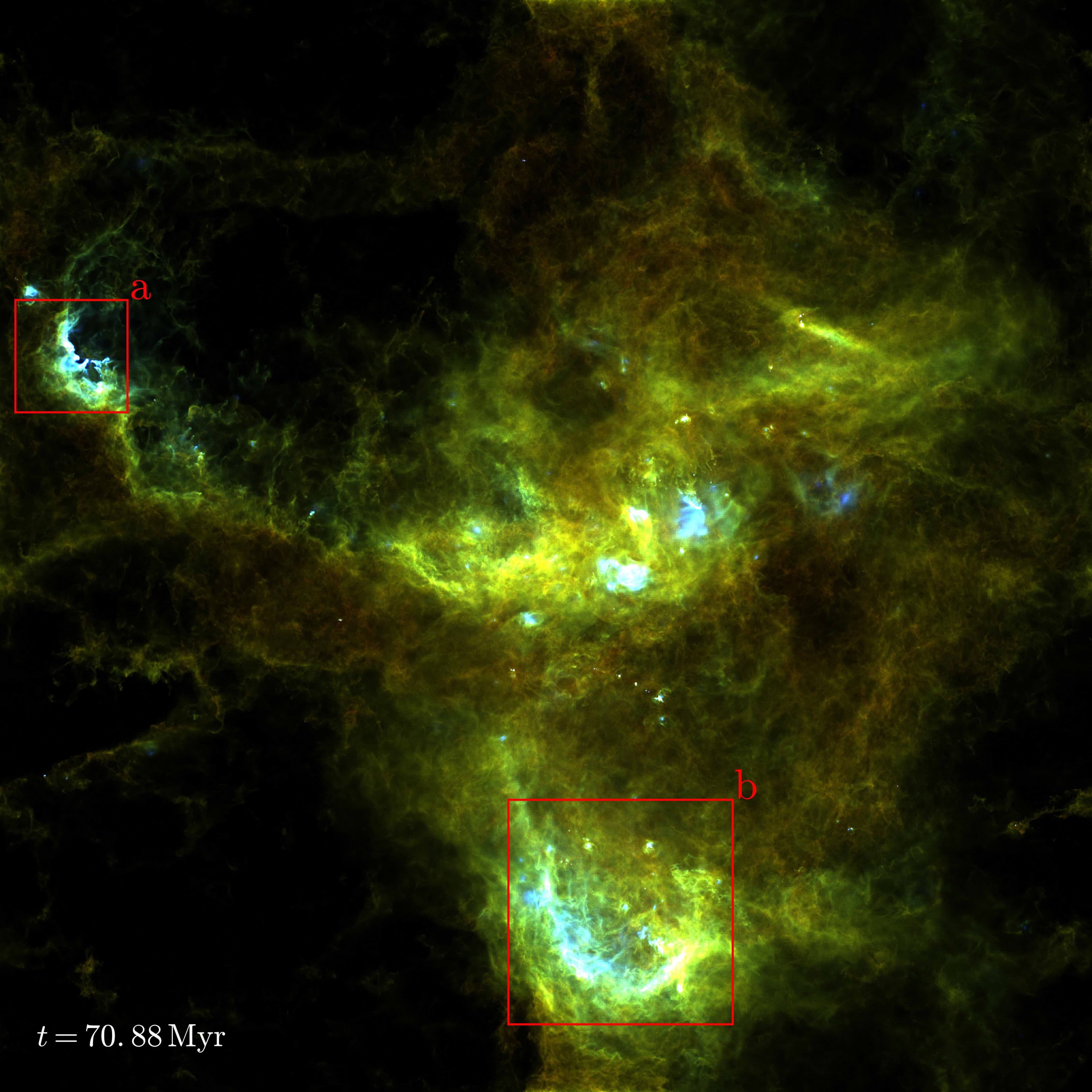
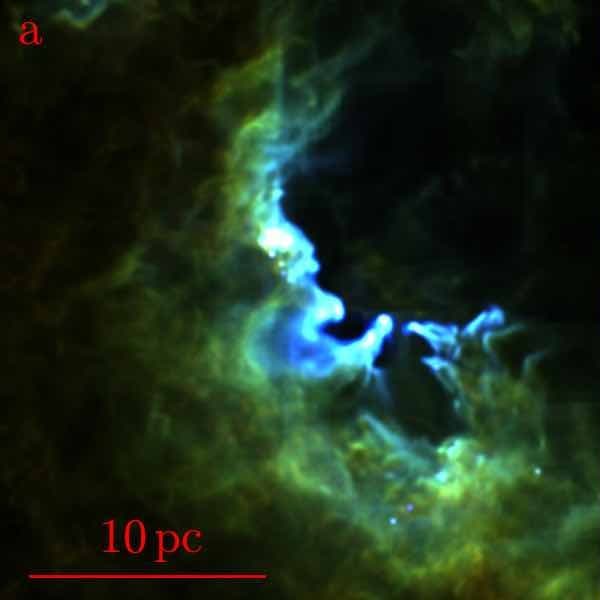
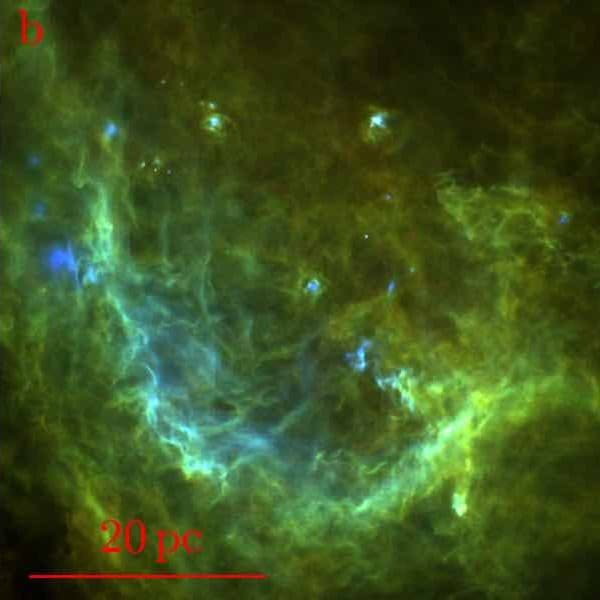
Massive stars are among the most influential objects in the universe. Although they are far less common than stars like the Sun, they produce most of the heavy elements found in galaxies, drive powerful stellar winds and supernova explosions, and shape the environments in which future generations of stars and planets form.
The Origin of Massive Stars (ORMAS) project seeks to answer one of the major unsolved problems in astrophysics: what determines the mass of a star, and how do high-mass stars form?
Using state-of-the-art supercomputer simulations, ORMAS follows the flow of gas from galactic scales down to the immediate surroundings of individual stars. By tracing how matter moves through turbulent interstellar clouds and into forming stellar systems, the project aims to uncover the physical processes that control stellar masses and the distribution of masses within stellar populations.
Publications
▾
Publications
▾
Conferences and Workshops
▾
Conferences and Workshops
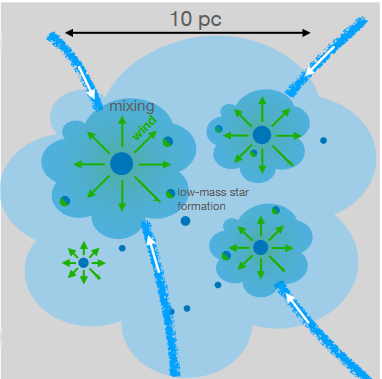
▾Bridging Gaps in High-Mass Star Research: Physical Parameters, Formation and Evolution

CMF2IMF: The Origin of the Stellar Initial Mass Function
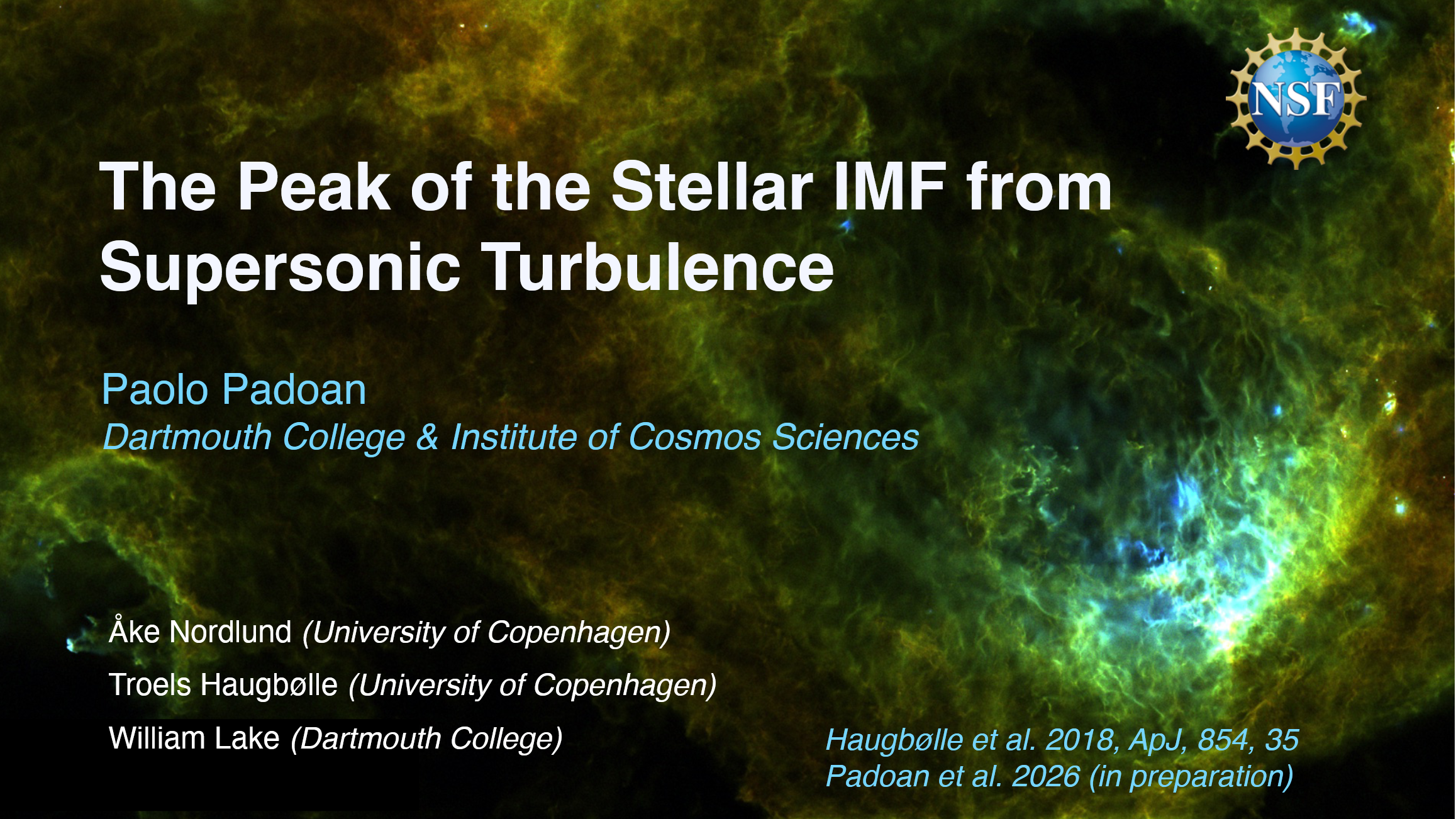
Presentation
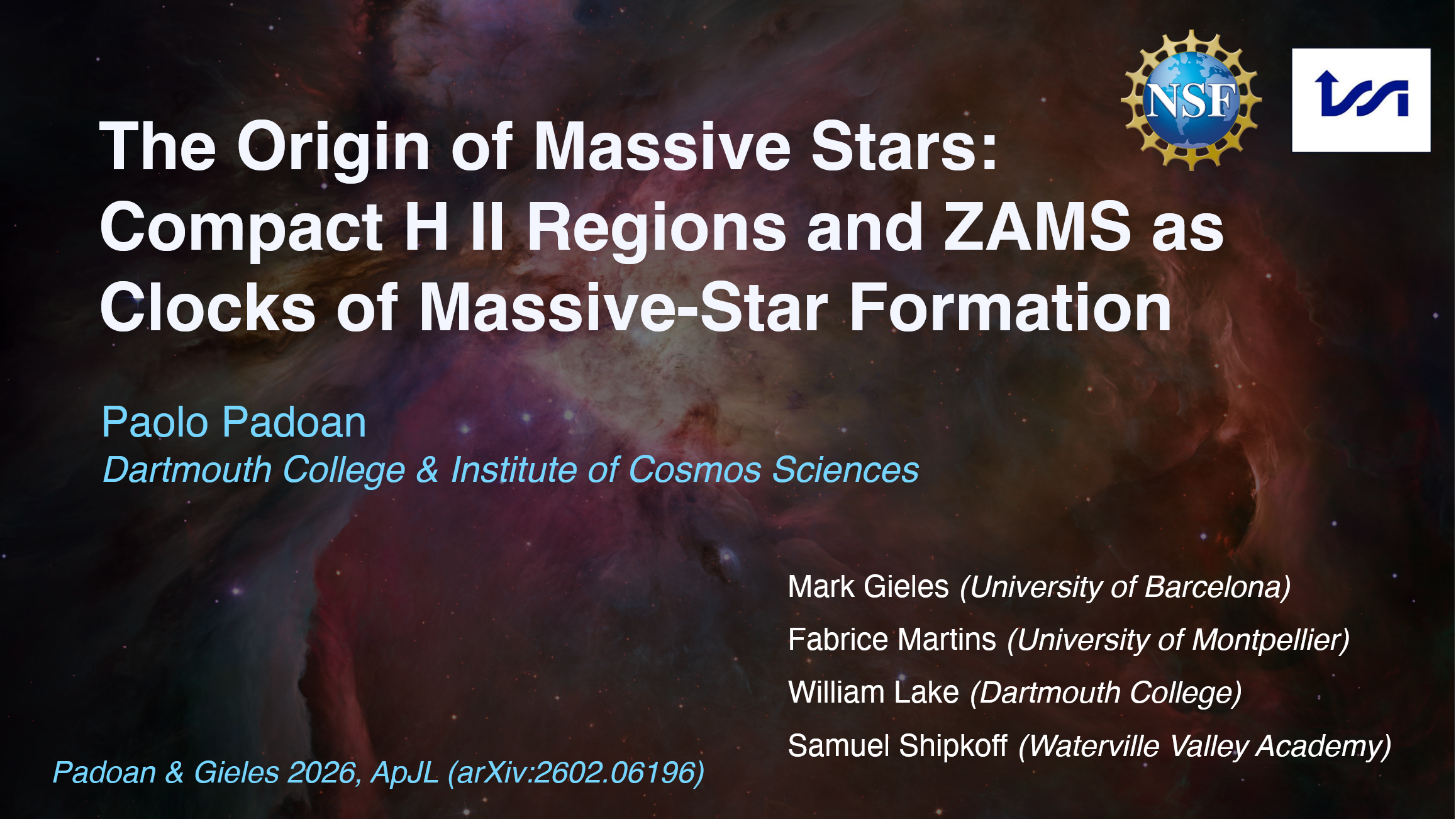
Structure and Energy in the Universe: From Interstellar Clouds to Cosmic Explosions

Presentation
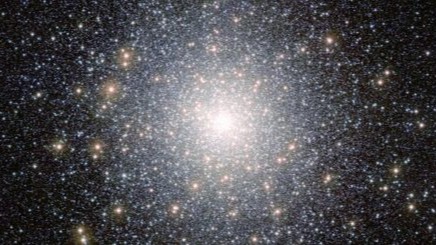
The Origin of Multiple Populations in Globular Clusters
Scientific Motivation
▾
Scientific Motivation
▾Massive stars play a very large role in the evolution of the universe. Their intense radiation, stellar winds, and eventual supernova explosions inject enormous amounts of energy into their surroundings, influencing the structure and evolution of entire galaxies.
These stars are also responsible for producing many of the heavy elements necessary for planets and life. Elements such as carbon, oxygen, and iron are created within stars and dispersed throughout galaxies when massive stars die. As a result, understanding how massive stars form is closely connected to understanding the origins of planetary systems, the chemical evolution of galaxies, and ultimately the conditions that make life possible.
Despite their importance, the processes that determine the final masses of massive stars remain poorly understood. ORMAS is designed to address this fundamental question.
Research Objectives
▾
Research Objectives
▾ORMAS focuses on two central scientific questions:
- —What determines the final mass of a massive star?
- —How does this process produce the observed distribution of stellar masses?
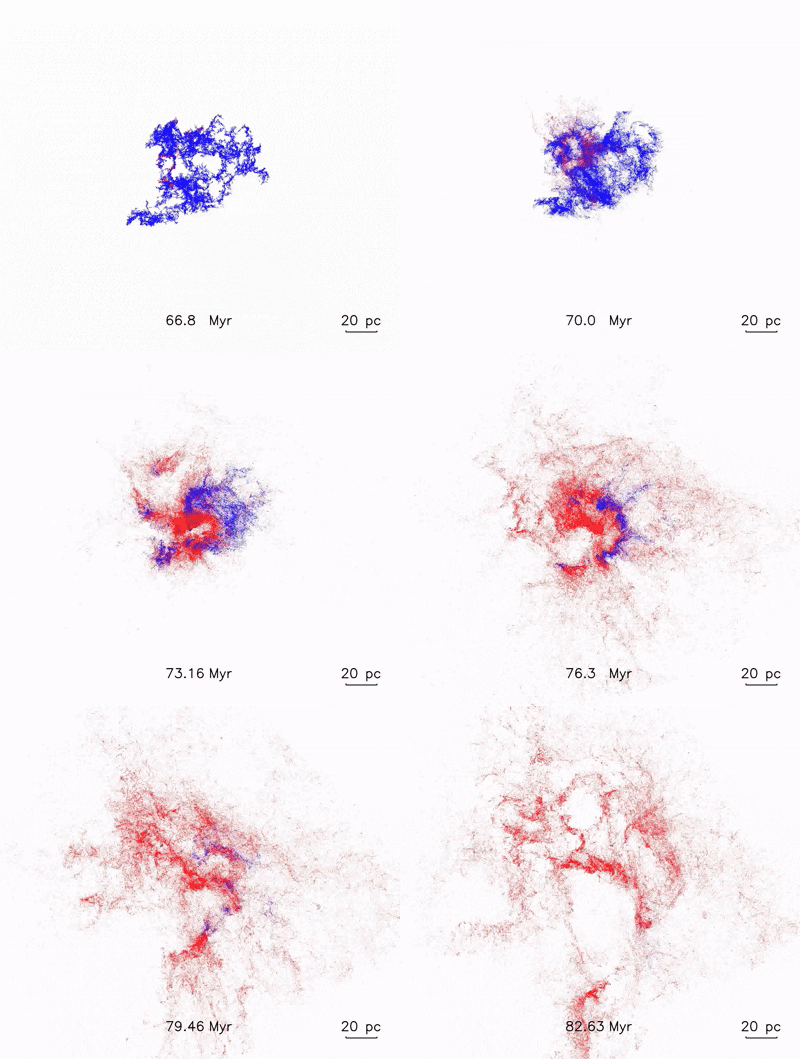
Traditional models often assume that massive stars form from the collapse of large, dense gas cores. However, recent observations and simulations increasingly suggest that massive stars may instead gather material from much larger reservoirs of gas distributed throughout filamentary structures within molecular clouds.
ORMAS will test competing theories of massive-star formation by studying how gas is transported through turbulent interstellar environments and accreted onto growing stars. The project aims to identify the dominant physical mechanisms that control stellar growth and to develop a predictive model for the high-mass end of the stellar initial mass function (IMF).
Computational Approach
▾
Computational Approach
▾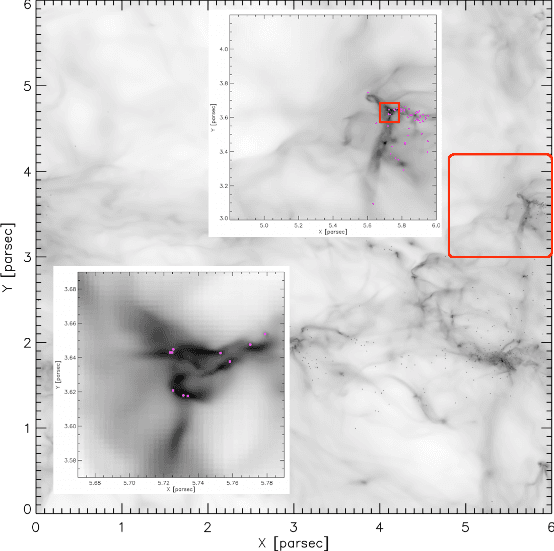
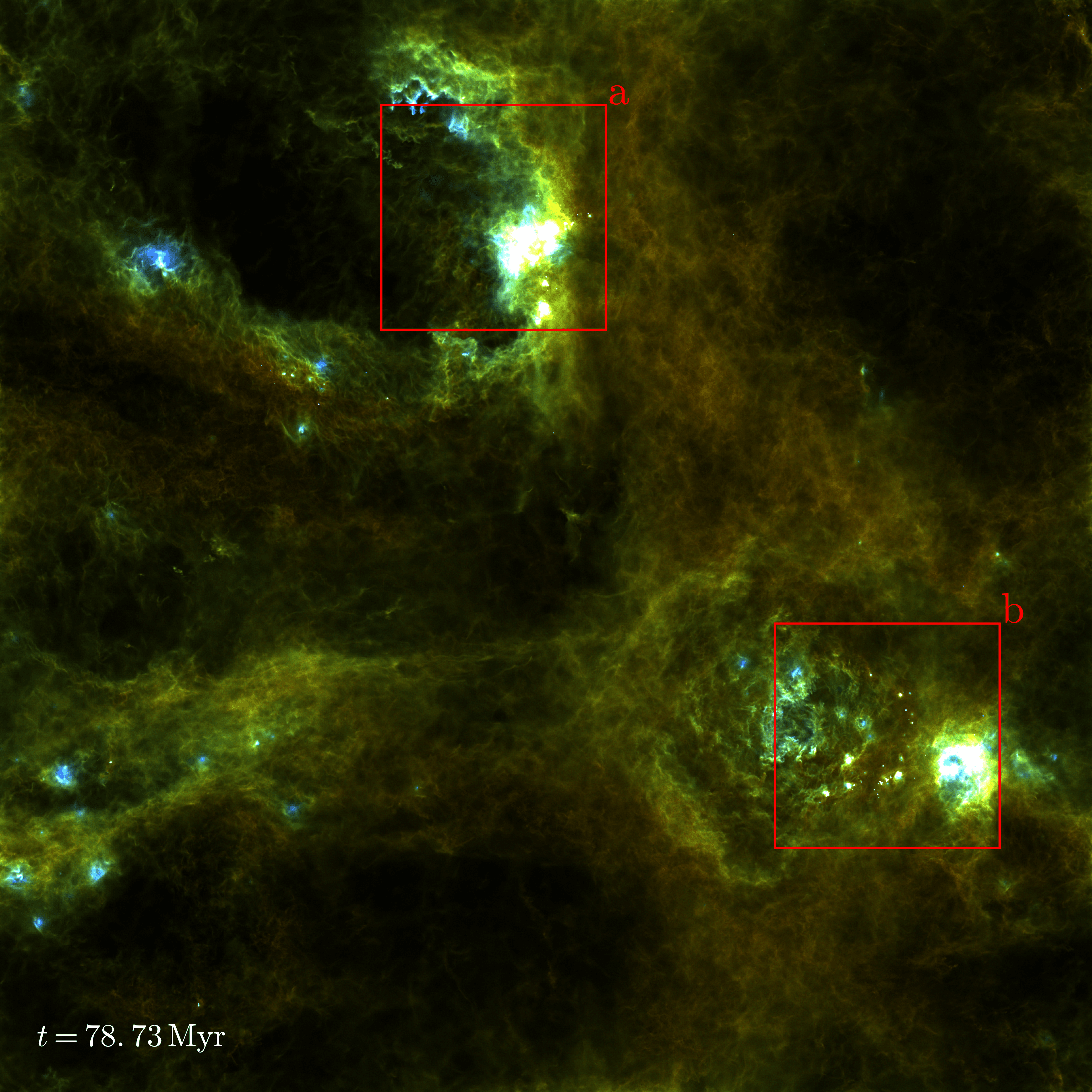
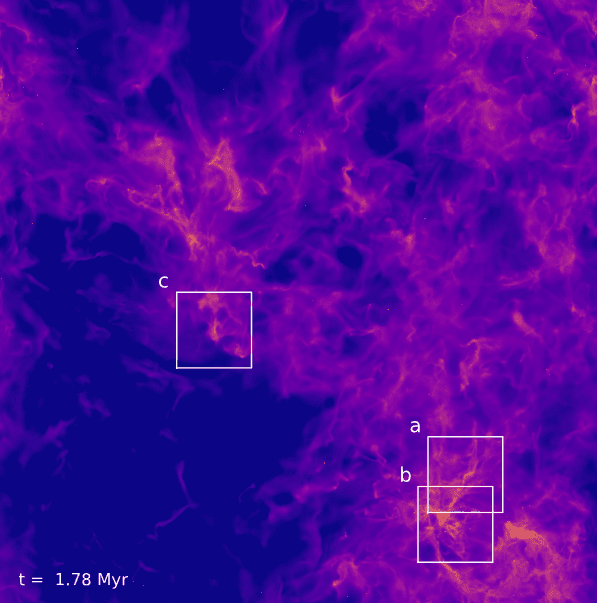
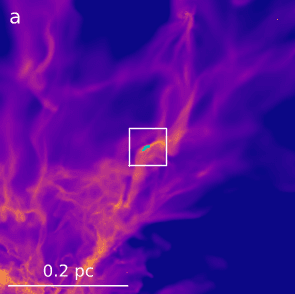
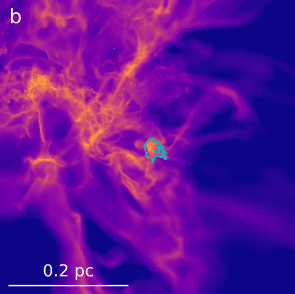
The formation of massive stars is an inherently multi-scale problem. Gas motions on scales of hundreds of parsecs influence the evolution of structures that ultimately feed individual stars on scales smaller than 1 AU.
To capture this enormous range of scales, ORMAS uses a sequence of advanced three-dimensional magnetohydrodynamic simulations. The project begins with a realistic simulation of a 250 pc region of the interstellar medium in which turbulence is naturally driven by supernova explosions.
From this large-scale environment, researchers perform progressively higher-resolution “zoom-in” simulations focused on the formation of a massive stellar cluster. These simulations allow the project to examine:
- —Supersonic turbulence and turbulent fragmentation
- —Magnetic fields and self-gravity
- —Protostellar jets and outflows
- —Ionizing radiation and stellar winds
- —The growth histories of individual massive stars
The simulations are performed using the DISPATCH computational framework, which enables efficient modeling across nearly nine orders of magnitude in spatial scale, from roughly 250 parsecs down to 0.1 astronomical units.
Expected Scientific Impact
▾
Expected Scientific Impact
▾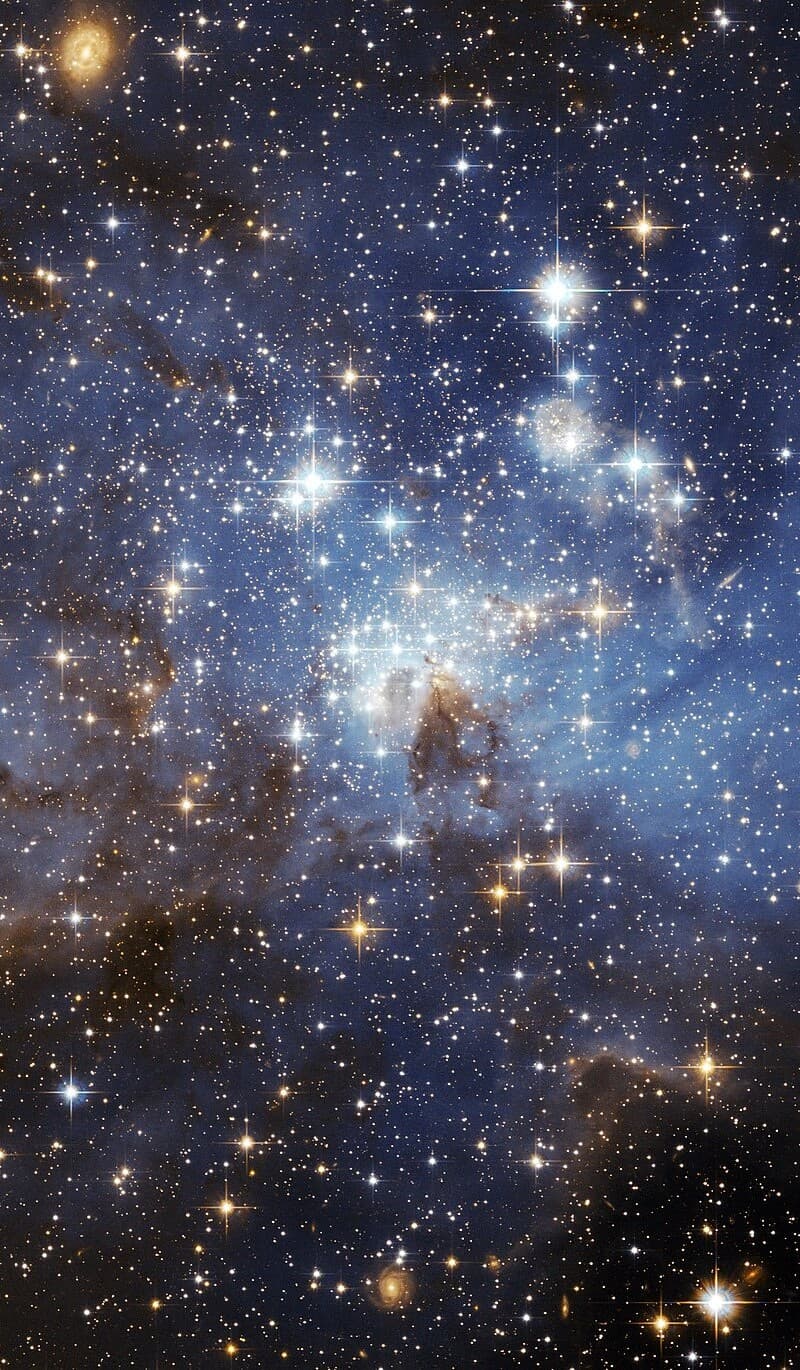
The results of ORMAS will have implications across multiple areas of astrophysics. By improving our understanding of how massive stars form, the project will help researchers:
- —Interpret observations of star-forming regions in the Milky Way and nearby galaxies.
- —Understand the origin and evolution of the stellar initial mass function.
- —Improve models of galaxy formation and evolution.
- —Interpret observations of distant galaxies discovered by the James Webb Space Telescope.
- —Better understand the progenitors of gravitational-wave sources such as merging black holes and neutron stars.
ORMAS will also generate large libraries of synthetic observations that can be compared directly with observations from facilities such as ALMA and future observatories. These datasets will help bridge the gap between theoretical simulations and astronomical observations.
Computing Sustainability Initiative
▾
Computing Sustainability Initiative
▾Modern scientific discovery increasingly depends on large-scale computing. However, the growing use of supercomputers, artificial intelligence, and cloud infrastructure also carries significant energy and environmental costs.
A unique aspect of ORMAS is its commitment to studying and reducing the carbon footprint of computational research. The project will track and publicly report the carbon emissions associated with its simulations, data analysis, and data storage.
In addition to developing more computationally efficient methods, ORMAS will support outreach efforts focused on increasing public awareness of the environmental impact of data centers and the importance of transitioning toward carbon-neutral computing infrastructure.
The project seeks to demonstrate that scientific progress and environmental responsibility can advance together.


Additional Information
▾
Additional Information
▾Competing Models of Massive-Star Formation
A central goal of ORMAS is to distinguish between the leading theoretical models of massive-star formation and determine which physical mechanisms ultimately control stellar masses.
Three primary scenarios currently dominate the field:
Turbulent-Core Model
Massive stars form from the collapse of massive, gravitationally bound prestellar cores that already contain most of the material needed to build the final star.
Competitive Accretion Model
Stars begin with relatively small masses and subsequently compete for gas from a shared cluster environment, with the most massive stars accreting the largest fraction of the available material.
Inertial-Inflow Model
Massive stars initially form within dense cores, but acquire most of their mass later through large-scale converging flows generated by the surrounding turbulent environment.
Recent observations have challenged the assumption that massive prestellar cores are the dominant pathway to massive-star formation, motivating a closer examination of large-scale accretion processes and filamentary mass transport.
ORMAS will directly test the predictions of these competing models by measuring accretion histories, formation timescales, mass reservoirs, and flow geometries within realistic star-forming environments.
Multi-Scale Simulation Program
A defining feature of ORMAS is its ability to follow the growth of massive stars across nearly nine orders of magnitude in spatial scale.
The project begins with an existing simulation of a supernova-driven interstellar medium spanning 250 parsecs. From this large-scale environment, a forming stellar cluster is selected for a sequence of increasingly detailed zoom-in simulations.
The computational program is organized into three major phases:
Phase 1: Turbulence and Mass Transport
The first phase focuses on turbulent fragmentation and the transport of gas through molecular clouds. Extensive convergence studies will determine the numerical resolution required to obtain stable predictions for stellar mass distributions and cluster properties.
Phase 2: Self-Consistent Protostellar Jets
The second phase increases the local resolution around accreting stars to approximately 0.1 AU, allowing magneto-centrifugally driven protostellar jets to emerge directly from the simulations rather than being imposed through sub-grid prescriptions. These calculations will quantify how outflows alter accretion pathways and affect stellar growth.
Phase 3: Massive-Star Feedback
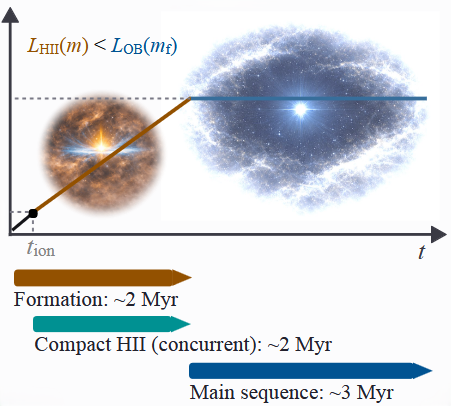
The final phase incorporates photoionization, HII region expansion, and line-driven stellar winds. By comparing the results of all three phases, ORMAS will isolate the relative importance of turbulence, jets, and radiative feedback in shaping the stellar initial mass function and regulating cluster evolution.
Advanced Computational Methods
ORMAS relies on the DISPATCH framework, a task-based asynchronous simulation code designed specifically for extreme-scale astrophysical calculations.
Unlike traditional domain-decomposition approaches, DISPATCH employs local time stepping and dynamic task scheduling. This architecture allows computational resources to be concentrated where physical activity is occurring, significantly improving performance for simulations that span enormous ranges of density, velocity, and spatial scale.
To model stellar evolution consistently, ORMAS incorporates results from detailed calculations performed with the MESA stellar evolution code. Machine-learning models trained on large libraries of MESA simulations allow these stellar properties to be incorporated efficiently into large-scale calculations.
Synthetic Observations and Model Validation
Rather than comparing theoretical predictions directly to observational catalogs, ORMAS adopts a forward-modeling approach.
Simulation outputs will be processed through radiative-transfer calculations to generate realistic dust-continuum and spectral-line observations. These synthetic datasets will then be analyzed using the same techniques applied to observations from facilities such as ALMA.
This strategy enables direct comparisons between simulations and observations while minimizing biases introduced by differing analysis methods. The resulting catalogs of synthetic star-forming regions, protostellar objects, and young stellar clusters will also provide valuable resources for planning and interpreting future observational campaigns.
Toward a Predictive Theory of the Initial Mass Function
The ultimate scientific objective of ORMAS is to develop a physically motivated model for the high-mass end of the stellar initial mass function (IMF).
Current IMF theories rely on assumptions that remain difficult to verify observationally and often produce conflicting predictions when tested against numerical simulations. By tracing the complete pathway through which gas is transported from turbulent molecular clouds to individual massive stars, ORMAS will provide some of the strongest tests to date of existing IMF theories.
Whether the outcome is a new analytic model, a semi-analytic framework, or a set of empirical scaling relations, the project aims to establish a predictive connection between turbulent interstellar environments and the masses of the stars they produce.